





Electric bikes have changed the way we get around and enjoy the outdoors – just think about it, they’ve revolutionised the whole commute and off-road experience. But at the heart of any e-bike, there’s something that really makes it tick: the battery. And let’s be honest, without a decent battery, even the most advanced e-bike is just a heavy bike that you have to pedal everywhere. Understanding how e-bike batteries work is crucial to getting the most out of your ride and making the most of every charge.
Whether you’re a seasoned cyclist looking to upgrade or a newcomer to the world of lithium-ion tech, being able to tell the difference between volts and amp-hours is pretty essential. One thing is for sure – the battery is what determines how far you can ride on a single charge, how much power you’ve got when tackling those tough hills and all sorts of other important stuff.
Getting to Grips with e-Bike Battery Basics
At the centre of every modern e-bike is a lithium-ion battery. Gone are the heavy, inefficient batteries of old – these days we’ve got lithium-ion batteries that pack a serious punch, offering loads of energy in a very light package. That’s what makes e-bikes so manageable and easy to handle.
Making Sense of the Jargon: Volts, Amps, and Watt-Hours
To really understand how a battery performs and what kind of capacity it has, you need to get to grips with three main things:
- Volts (V): Think of voltage as the “pressure” that pushes electricity through the system. A higher-voltage battery generally delivers more power to the motor, resulting in faster acceleration and better hill-climbing ability. Most e-bike systems run on 36V or 48V, though higher-performance models may use 52V or more.
- Amp-Hours (Ah): This measures the battery’s “fuel tank” size. It indicates how much current the battery can deliver over one hour. A battery with higher amp-hours (Ah) can run for longer, directly influencing your range.
- Watt-Hours (Wh): This is the most critical figure for comparing overall capacity. You calculate it by multiplying volts by amp-hours (V x Ah = Wh). For example, a 36V 10Ah battery has a capacity of 360Wh. The higher the watt-hours, the more energy the battery holds, translating to a longer potential range.
The Role of Battery Chemistry
While lithium-ion is the industry standard, the specific battery chemistry can vary. Most high-quality batteries use variants such as Nickel Manganese Cobalt (NMC) or Lithium Iron Phosphate (LiFePO4). These chemistries are chosen for their stability, lifespan, and ability to deliver reliable power without suffering from the dreaded “memory effect” seen in older technologies like Nickel Metal Hydride.
E-Bike Battery Types and Configurations
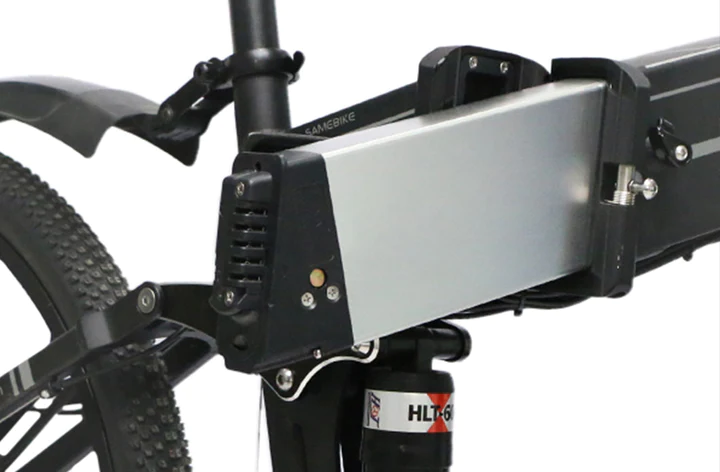
Not all batteries are created equal, and their physical designs often dictate the bike’s look and feel. Manufacturers use different configurations to balance aesthetics with practicality.
Frame-Integrated Batteries
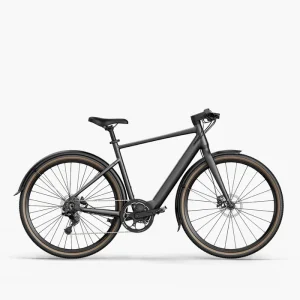
These batteries are built directly into the bicycle’s downtube. They offer a sleek, streamlined look that often makes the e-bike indistinguishable from a standard bicycle. Aside from aesthetics, frame-integrated batteries lower the centre of gravity, providing better handling. However, depending on the design, some non-removable batteries can make charging inconvenient if you cannot bring the bike indoors.
Rear Rack Batteries
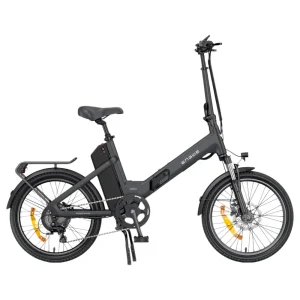
Common on commuter and city bikes, rear rack batteries are mounted on a rack above the rear wheel. They’re usually pretty easy to remove for charging and are a great option for step-through frames with limited downtube space, where other batteries just won’t fit. Of course, the trade-off is that putting weight up high at the rear can give the bike a slightly wonky balance.
Range Extender Batteries
For anyone who gets the jitters on long rides – you know, range anxiety – range extender batteries are a total lifesaver. These are smaller, supplementary battery packs that just happen to be shaped like a water bottle – and they plug into the mains system to give you an extra kick of watt-hours. They are perfect for long weekend rides when a single charge just isn’t going to cut it.
Battery Management System (BMS) and Safety
You might not even notice it, but inside the battery casing is this tiny computer known as the Battery Management System (BMS). This is the real brains of the operation, keeping you safe and prolonging the life of the lithium cells.
The BMS does its job by constantly monitoring the health of each individual battery cell. It makes sure that no single cell is getting overcharged or drained too far – both of which can cause some pretty permanent damage. The BMS also keeps an eye on the temperature, and if it gets too hot, it’ll just shut off the power to prevent any kind of thermal runaway and the risk of a fire.
Modern BMS units are getting more and more sophisticated, and some can even talk to your smartphone or the bike’s display to give you real-time health diagnostics, so you’re always on top of your battery’s condition.
Keeping Your E-Bike Batteries Alive
Taking good care of your battery is key to making it last longer – and it’s not as hard as you might think. While lithium-ion batteries will naturally degrade over time, your habits can either speed up or slow down the process.
The Charging Lowdown
- Don’t Be a Hero: Don’t try to charge your battery straight after a long ride if it’s still hot – just let it cool off first. And similarly, don’t try to charge it in freezing conditions – just bring it indoors and let it get up to room temperature.
- That 20-80 Percentage Sweet Spot: While it’s fine to charge up to 100% if you’re about to go on a long ride, for everyday commuting or just storing it, try to keep it between 20% and 80%. Don’t let it get to 0% too often, and don’t leave it stuck at 100% for weeks on end – that can give the cells a bit of a headache.
- Stick with What Came with it: Always use the charger that came with your bike. Cheap third-party chargers just might not have the same level of voltage control or safety shut-off – and that can be a real problem.
Storage Tips
If you are putting your bike away for the colder months, remove the battery. Store it in a cool, dry place (ideally around 15-20°C). Crucially, do not store it empty. A lithium battery left at 0% for months can suffer from deep discharge, rendering it useless. Aim to store it at around 60% charge and check it every few weeks.
Factors Affecting E-Bike Battery Performance
You may notice that your manufacturer claims a range of “up to 60 miles,” but you only achieve 40. This discrepancy is usually due to real-world variables that affect energy consumption.
Rider and Environmental Factors
- Rider Weight and Cargo: Physics is unavoidable; moving a heavier load requires more energy. A heavier rider or a bike loaded with panniers will drain the battery faster than a lightweight setup.
- Terrain: Climbing steep hills demands significantly more power than cruising on flat tarmac. If your route is hilly, expect your range to drop.
- Tyre Pressure: Under-inflated tyres create more rolling resistance (friction) with the road. Keeping tyres at the recommended pressure is the easiest way to maximise range.
Weather Conditions
When the temperature drops, battery chemistry really takes a hit. In cold weather, the chemical reactions inside the battery slow way down, and your range suffers. Depending on how cold it is, you might find your range drops by 20-30% in winter compared to summer. On the flip side, temperatures that are just too hot can actually do some permanent damage to the battery cells.
Choosing the Right E-Bike Battery
Choosing the right battery is basically a balancing act between how much capacity you need, how much weight you’re carrying and how much you’re willing to spend.
Assess Your Riding Style
If you’re only doing a short daily commute (anything like 5 to 10 miles round trip) you’ll probably be fine with a standard 300Wh to 400Wh battery thats not too heavy. But if you’re planning to go on long tours or you have a cargo e-bike, you’ll need something with a lot more oomph – maybe a 600Wh or bigger battery.
Compatibility Check
If you’re on the market for a new battery – whether that’s a replacement or a spare – the most important thing is making sure it’s compatible with your e-bike. Voltage is key here – so if you’ve got a 36V system, you need a 36V battery. Now it’s often possible to upgrade to a higher amp-hour (Ah) battery for a bit more range, but you cannot change the voltage without risking causing some serious damage to your motor and controller. Always double-check the battery and your manual to make sure you get the right model number and connector.
E-Bike Battery Troubleshooting and Repair
Even with the best maintenance, things can still go wrong. Knowing how to spot common problems early on can end up saving you a lot of time and money.
Common Issues
- Reduced Range: This is normal over years of use, but a sudden drop could indicate a cell imbalance.
- Charging Issues: If the battery won’t charge, check the charger first. Is the indicator light coming on? Check the charging port for debris or corrosion.
- Power Cut-Outs: If the bike cuts out under load (like climbing a hill) but works on the flat, the battery voltage might be sagging due to age or poor cell quality.
Repair vs. Replace
Battery repair is a specialist job. If you suspect internal damage or BMS failure, do not attempt to open the battery pack yourself. Lithium cells are dangerous if punctured or short-circuited. Consult a professional service centre. In many cases, if a battery is more than 4-5 years old and failing, a full replacement is the most economical and safest option.
E-Bike Battery Upgrades: When Speed & Range Are All That Matter
For any enthusiast desperate to squeeze a bit more out of their e-bike, upgrading is a pretty tempting idea.
Capacity Upgrades – The Straightforward Approach
The first thing most people think about when looking to boost their e-bike’s performance is getting a more power-packed battery. And honestly, that’s not a bad place to start. If your bike will still take it, swapping that 400Wh pack for a 625Wh one can genuinely make a world of difference to how you enjoy your ride. You can cruise out on longer adventures without that nagging worry of running on empty.
Modification Dangers – The Fine Print
Please exercise extreme caution when it comes to messing about with aftermarket mods. Throwing in a couple of extra batteries in parallel, or jacking up the voltage to make it go a bit faster, is an absolute no-go. Not only will it void your warranty, but it could also pose a pretty massive fire risk – and that’s if the wiring and the battery management system are even capable of handling the extra load. Safety always has to come first – no matter how much extra speed you think you need.
The E-Bike Battery Cost Conundrum
The e-bike battery is often the big-ticket item – a significant chunk of your overall purchase price, often accounting for 30% or more of the total.
The Price Of A Good Battery – Money Well Spent
High-end batteries use top-notch cells from the likes of Samsung, LG or Panasonic. They cost more, but they offer a lot more in return – better energy density, better safety, and a battery that just plain lasts longer. Those cheaper, unbranded batteries might look fine on paper, but the reality is, they tend to degrade a lot quicker & lack the safety features you really need.
Cost Per Mile
When evaluating value, consider the lifespan. A cheaper battery might last 300 charge cycles, while a premium one might last 800-1000 cycles. Over three or four years, the “expensive” battery often works out cheaper per mile ridden because you won’t need to replace it as quickly.
E-Bike Battery Technology and Trends
The e-bike industry is moving fast, with battery technology trickling down from the automotive sector.
The Rise of Solid-State
We are on the cusp of seeing solid-state batteries enter the market. These promise to be safer (less flammable), charge faster, and hold more energy than current liquid-electrolyte lithium-ion batteries. While still expensive, they represent the future of lightweight e-bikes.
Smart Integration
We’re already starting to see a trend towards batteries that really get along with your bike – blending in seamlessly and adding loads of features. Expect to see a lot more of this kind of thing – like GPS tracking actually built into the battery, so you can maybe even recover your bike if it gets nicked. And also more accurate range-estimation – algorithms that learn the way you ride and adjust the predictions accordingly.
E-Bike Battery Standards and the Rules Around Them
As electric bikes start to become more and more popular, the rules are getting a lot tighter to keep cyclists safe.
Why Certification is a Big Deal
Over in the UK and Europe, batteries have got to meet some pretty tough safety standards. Look for the CE mark and make sure they fit with the likes of UN38.3 (for transport safety) and EN 15194 – that way you can be pretty sure the battery has been put through its paces for shock, vibration, short-circuit and overcharge protection.
Going Green – Environmental Regulations are Getting Tighter
The same thing’s happening with the way we deal with the hazardous stuff in batteries – getting stricter all the time. That’s pushing manufacturers to design batteries that are easier to take apart and recycle, cutting the environmental impact of e-bikes.
Testing and Certifying Your E-Bike Battery
Before that battery even gets onto your bike, it’s been put through a whole load of testing.
What’s Involved in Testing
Reputable manufacturers subject their battery packs to “crush tests,” drop tests, and thermal cycling (moving rapidly between hot and cold temperatures). This ensures that if you crash your bike or leave it in the sun, the battery remains safe.
Why Third-Party Certification is Key
When buying a replacement or a conversion kit, look for evidence of third-party testing (e.g., by TÜV or UL). Self-certification by unknown brands can sometimes be misleading. Independent testing acts as a guarantee that the high-quality cells and BMS claims are genuine.
E-Bike Battery Warranty and Support
A warranty is your safety net. Given the cost of replacement, you should never overlook the fine print.
What to Look For
A standard warranty on a quality e-bike battery is usually two years. However, check the details. Some warranties guarantee that the battery will hold at least 60% or 70% of its original capacity after two years or a certain number of charge cycles. This protects you against premature degradation, not just total failure.
Dedicated Support
Buy from brands that have a UK presence or dedicated support channels. If your battery fails, shipping a hazardous lithium battery back to an overseas seller can be difficult, expensive, and legally complex.
E-Bike Battery Recycling and Disposal
Eventually, every battery reaches the end of its life. However, this shouldn’t mean the end of the road for the materials inside.
Don’t Bin It!
It is illegal and dangerous to throw lithium-ion batteries into general household waste. They can cause fires in bin lorries and landfill sites.
Responsible Recycling
Most reputable bike shops that sell e-bikes will accept old batteries for recycling. Alternatively, check your local council’s guidance for its recycling centre. The valuable metals inside—lithium, cobalt, and nickel—can be recovered and reused to make new batteries, closing the loop and reducing the need for mining.